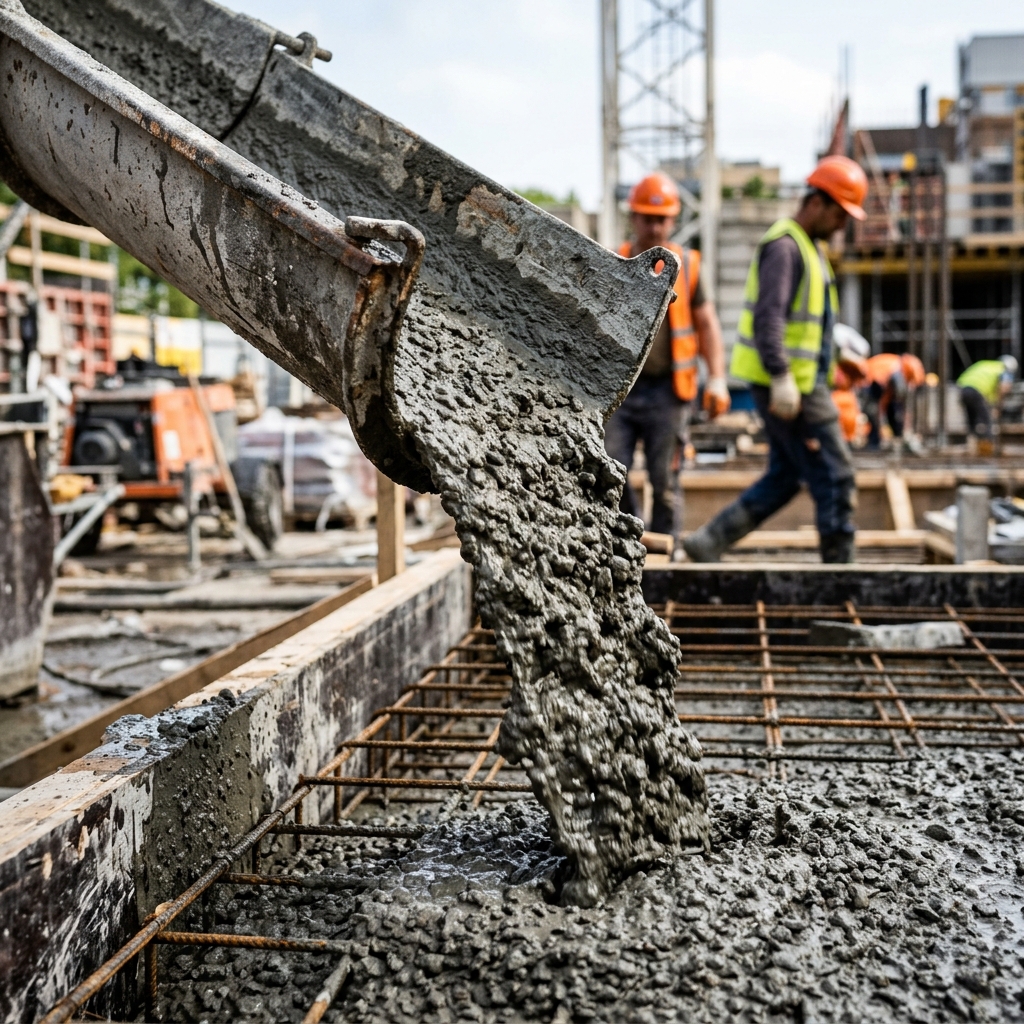
Summer temperatures in Northern Gujarat, particularly in districts like Patan and Mehsana, regularly exceed 42°C. Pouring concrete in hot weather introduces several challenges: rapid evaporation of water, fast cement hydration, slump loss, and increased risk of plastic shrinkage cracks.
Understanding Hot Weather Concrete Behavior
When concrete temperature rises above 32°C, the chemical reaction of cement hydration accelerates. This causes the mix to stiffen prematurely, reducing the time window for placement and finishing. Contractors often make the mistake of adding extra water on site to restore workability, which severely reduces the 28-day compressive strength of the structure.
Crucial Mix Design Adjustments
To ensure high-quality concrete pours during summer, incorporate the following guidelines:
- Chilled Water and Ice: Replace a portion of the mixing water with crushed ice to keep the fresh concrete temperature below 30°C during batching.
- Mineral Admixtures: Replace 15-25% of Ordinary Portland Cement (OPC) with fly ash or slag. These industrial byproducts hydrate at a slower rate, lowering the peak heat of hydration.
- Retarding Plasticizers: Use chemical admixtures that delay initial setting times. This maintains slump workability for up to 2 hours without requiring extra water.
Why Self-Loading Mixers excel in Hot Weather
In hot weather, transit time is critical. Standard transit mixers carrying concrete from a distant batching plant can experience significant slump loss due to heat during travel. Self-loading concrete mixers mix the concrete right at the project site immediately before pouring, ensuring zero slump loss and maximum strength characteristics.
Tip: Always damp the aggregate stockpiles with water spray to lower their temperature before batching, and cure the poured concrete surface immediately using wet burlap sheets.